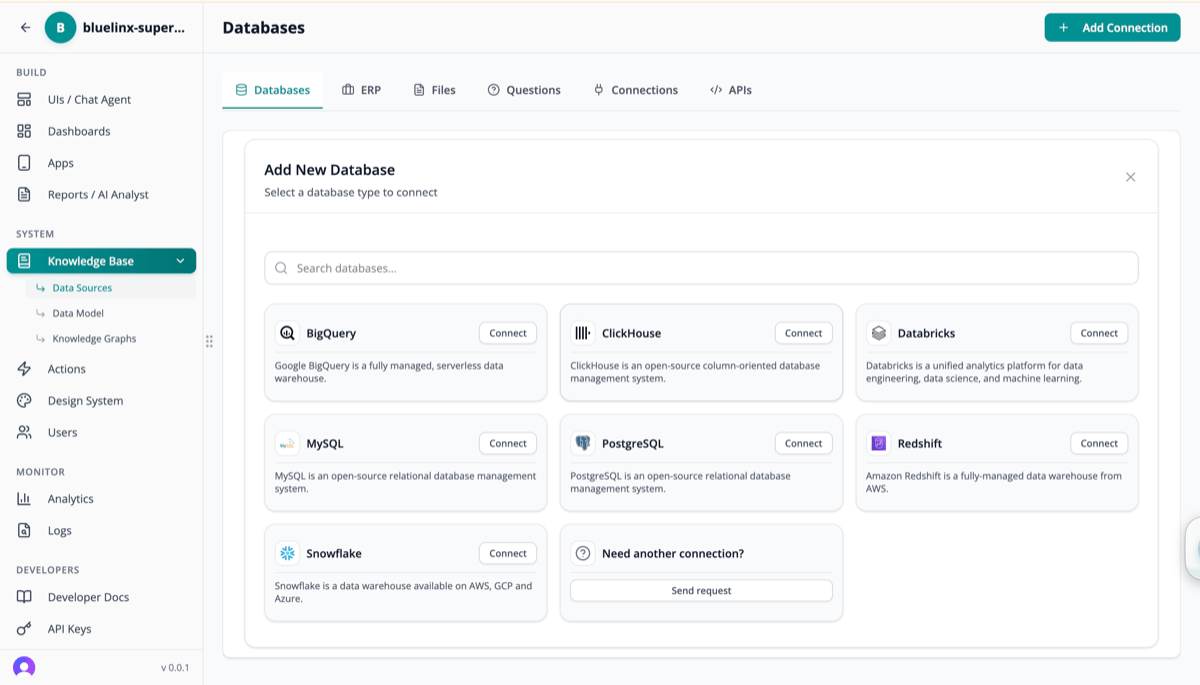
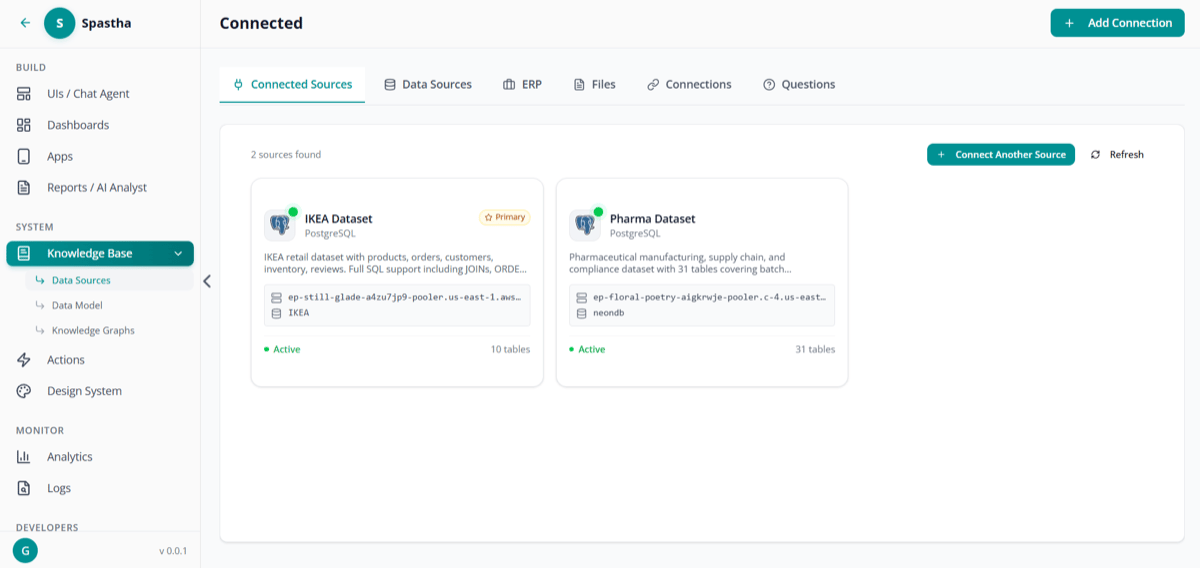
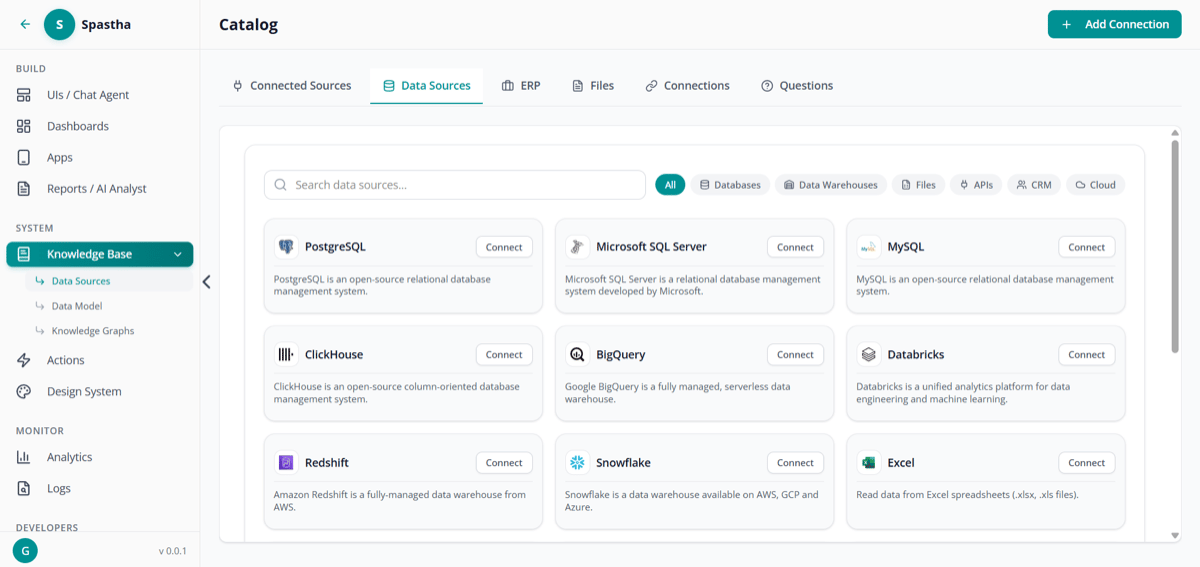
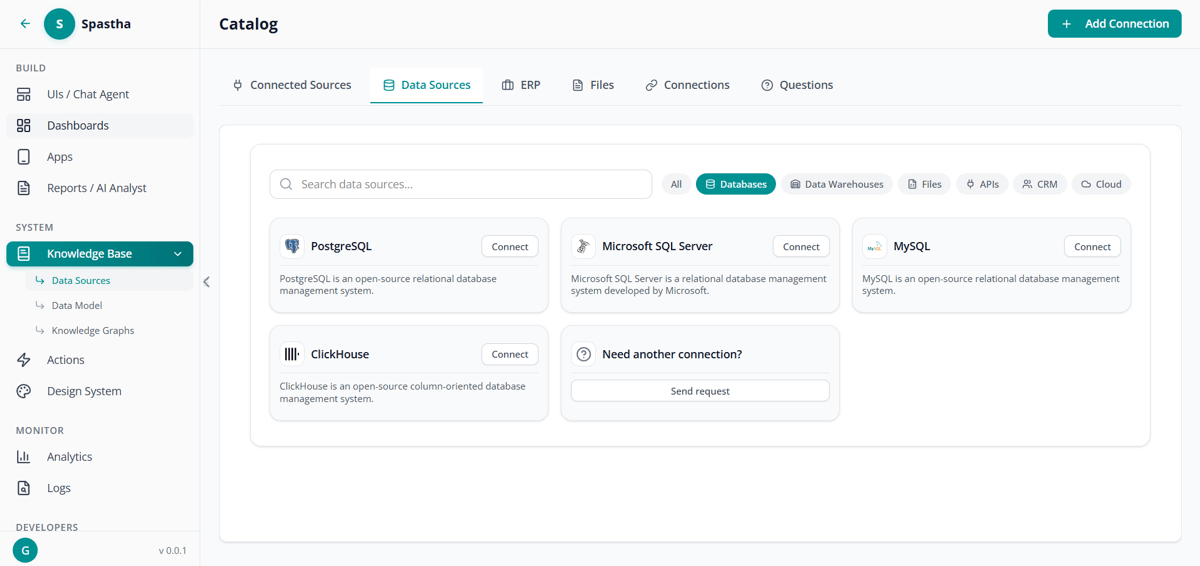
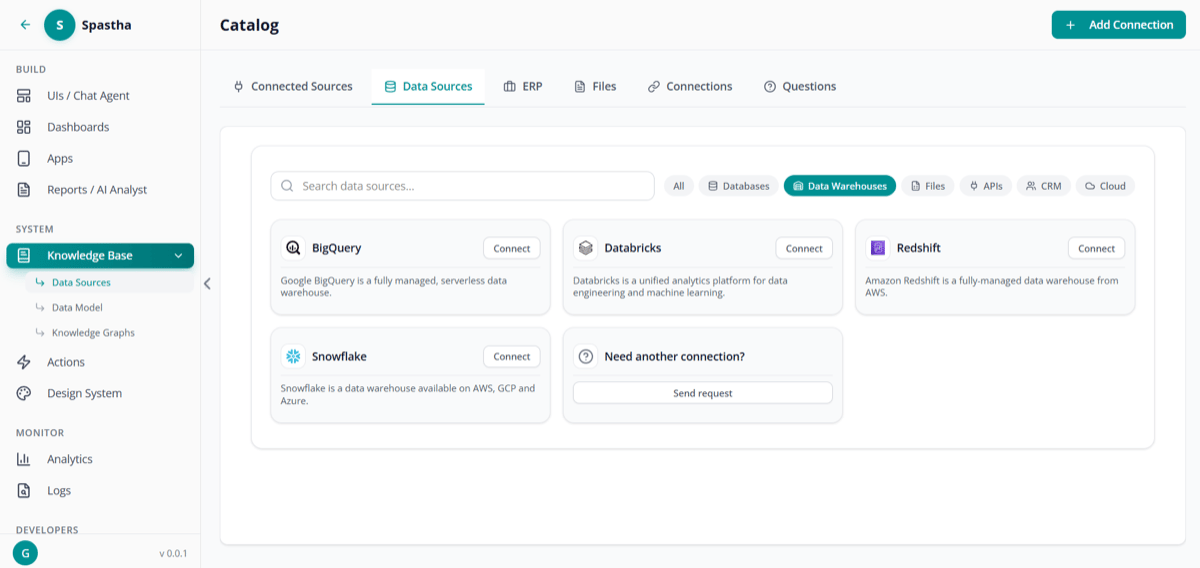
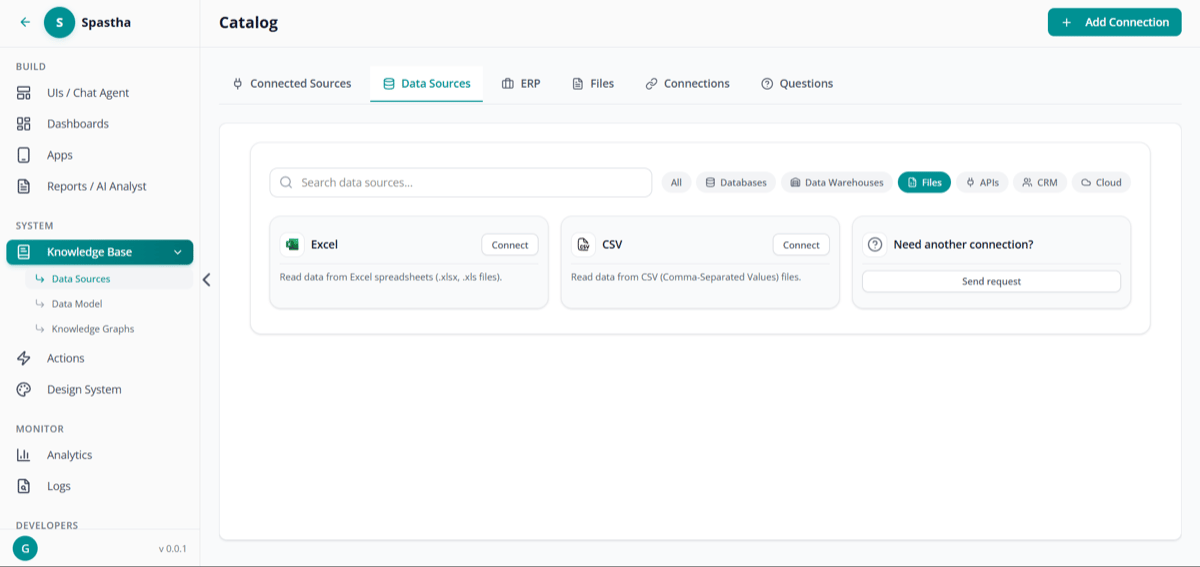
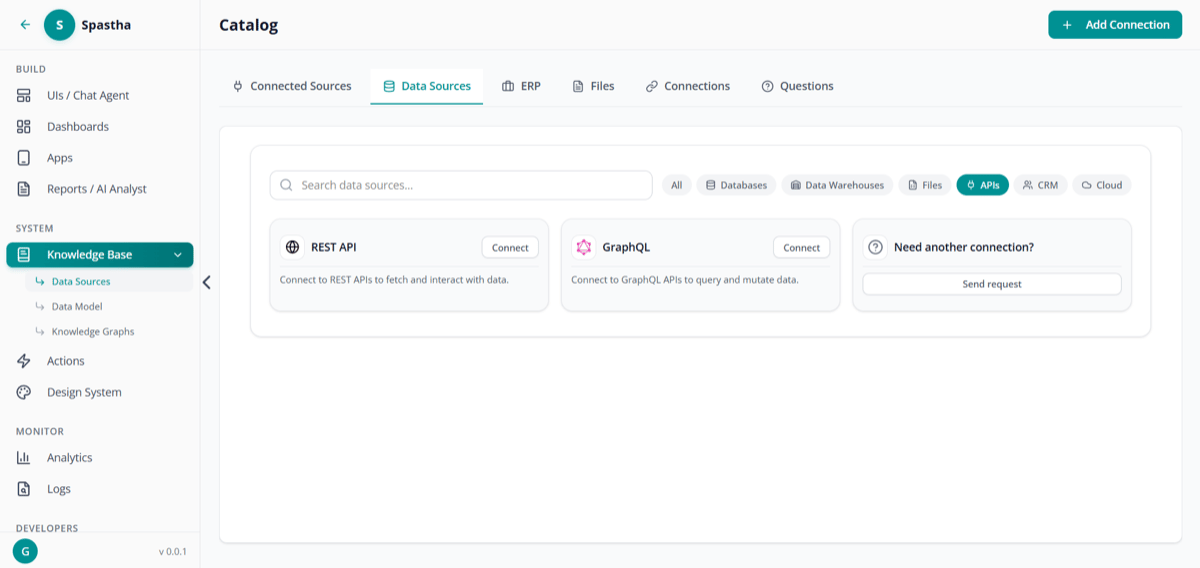
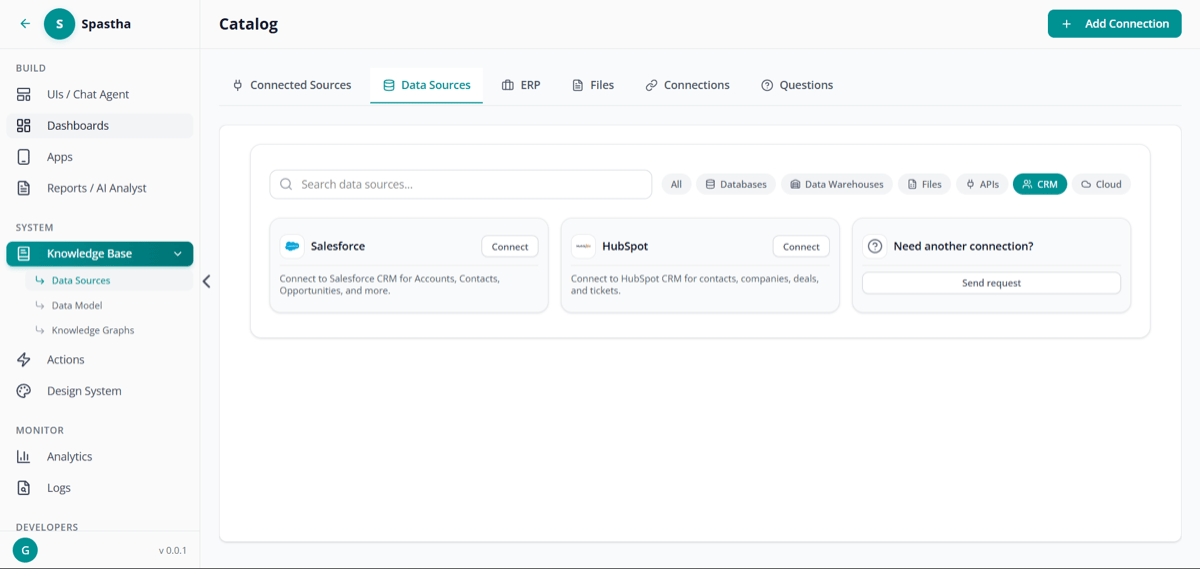
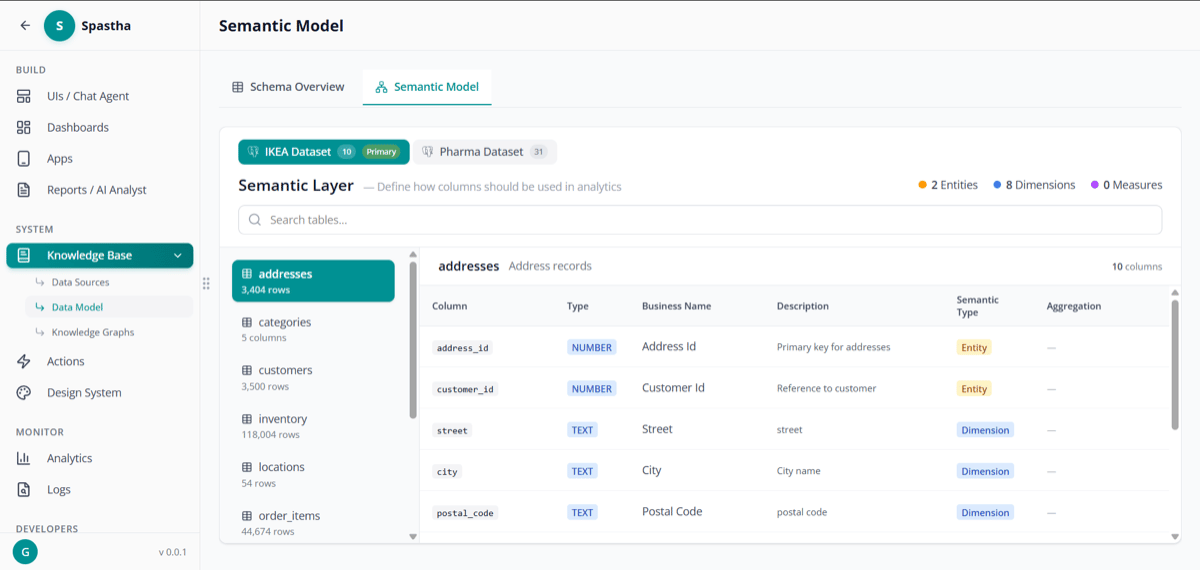
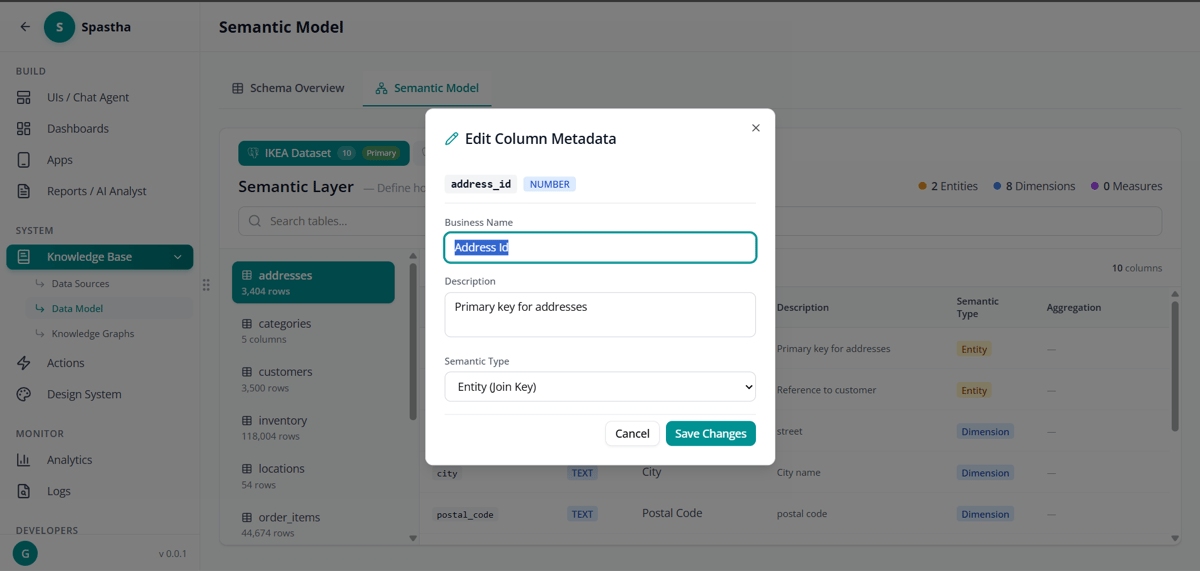
Connect data sources and build organizational intelligence
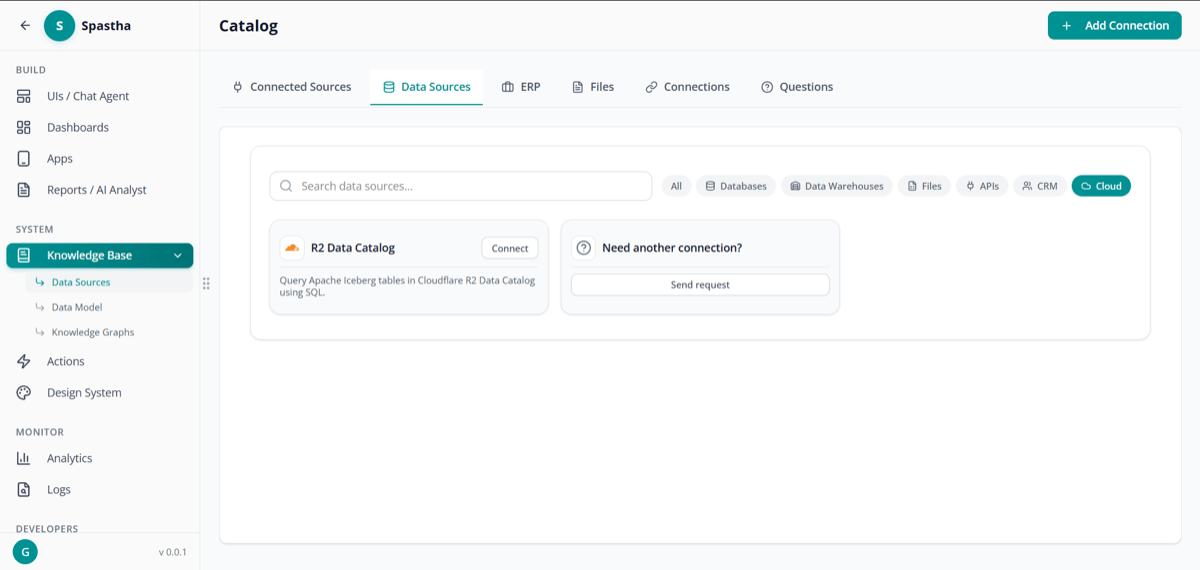
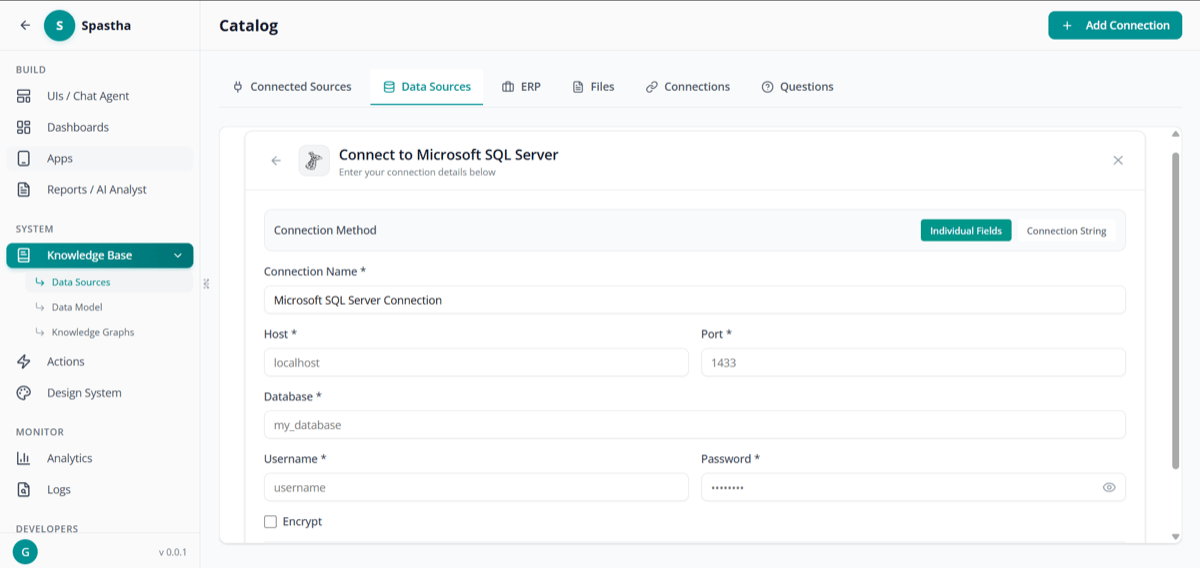
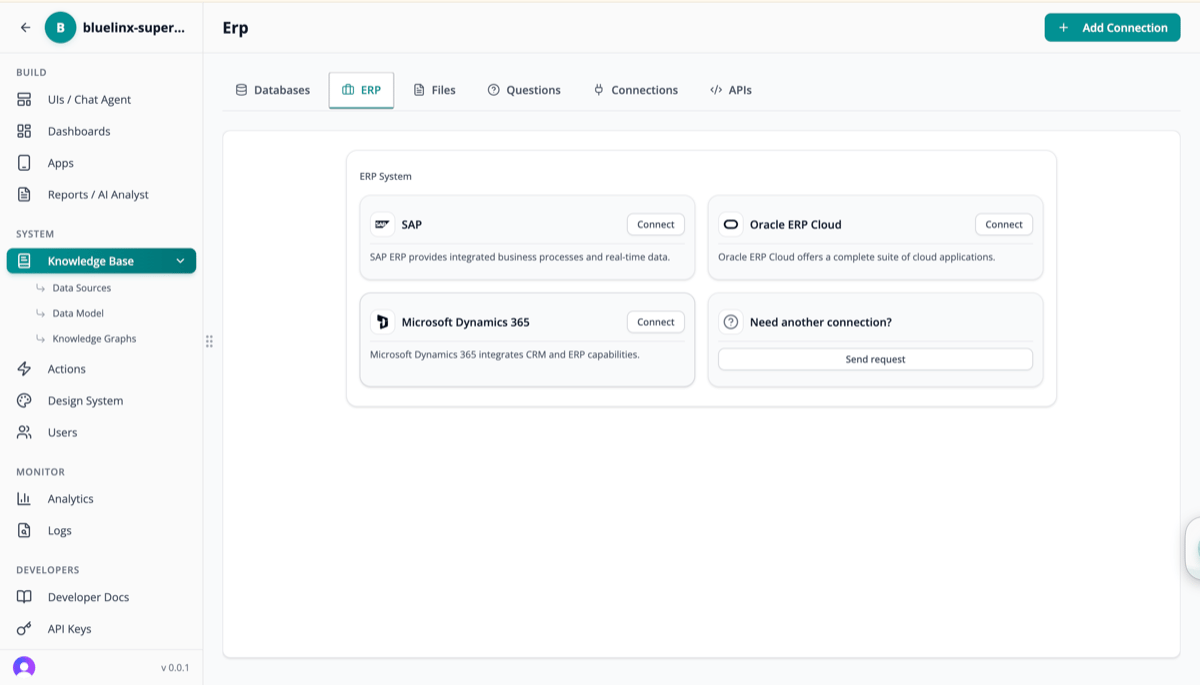
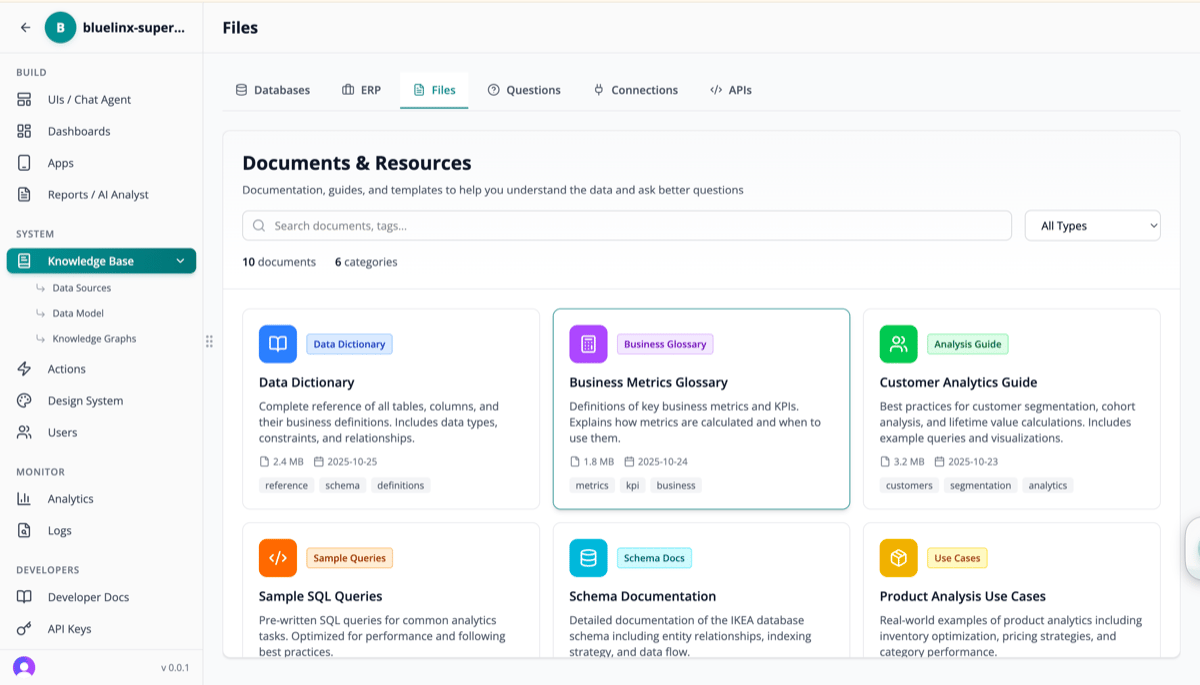
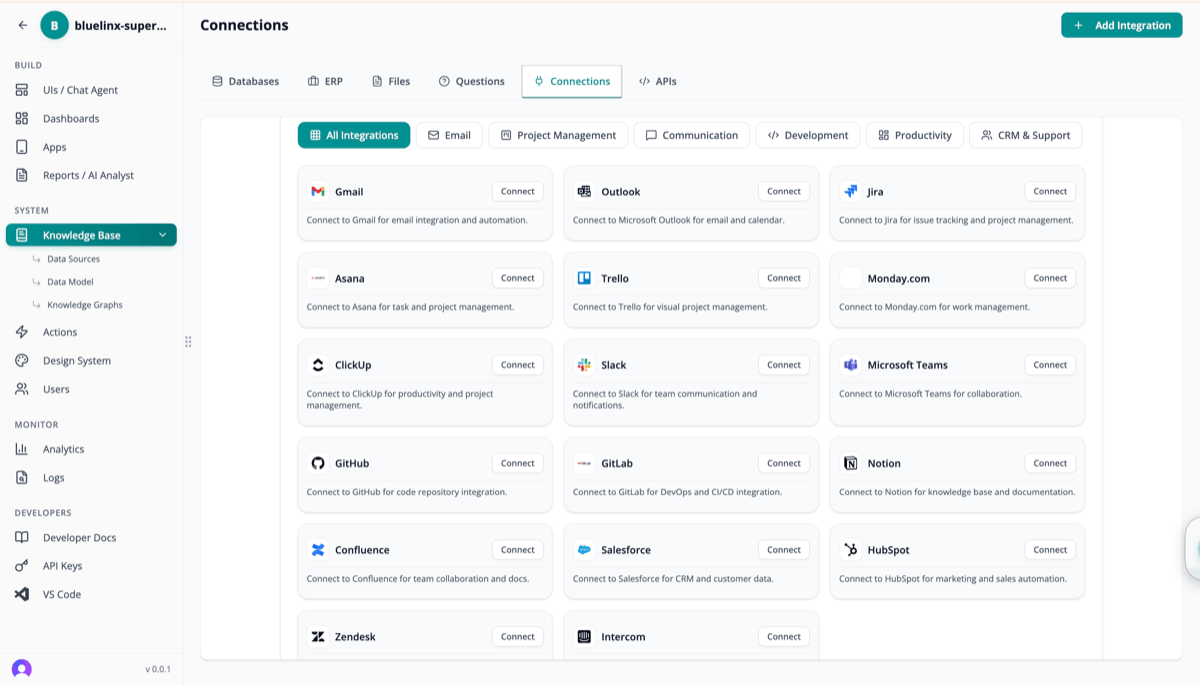
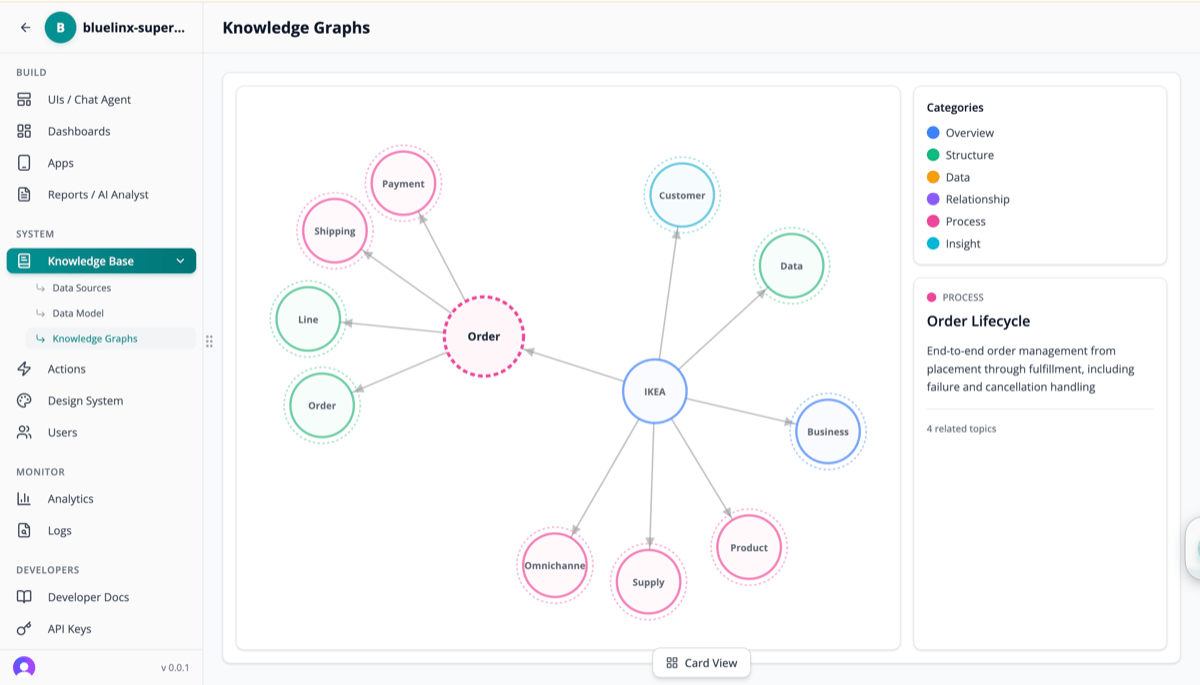
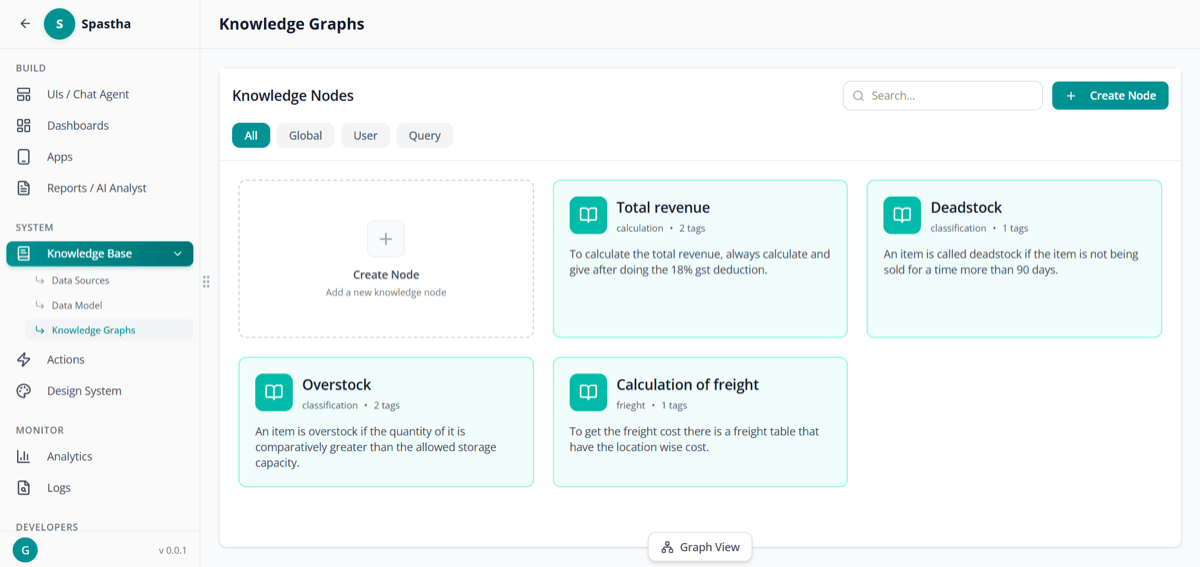
The Knowledge Base is where Superatom connects to your data and builds understanding of your organization. It includes data sources, file management, integrations, and knowledge graphs.
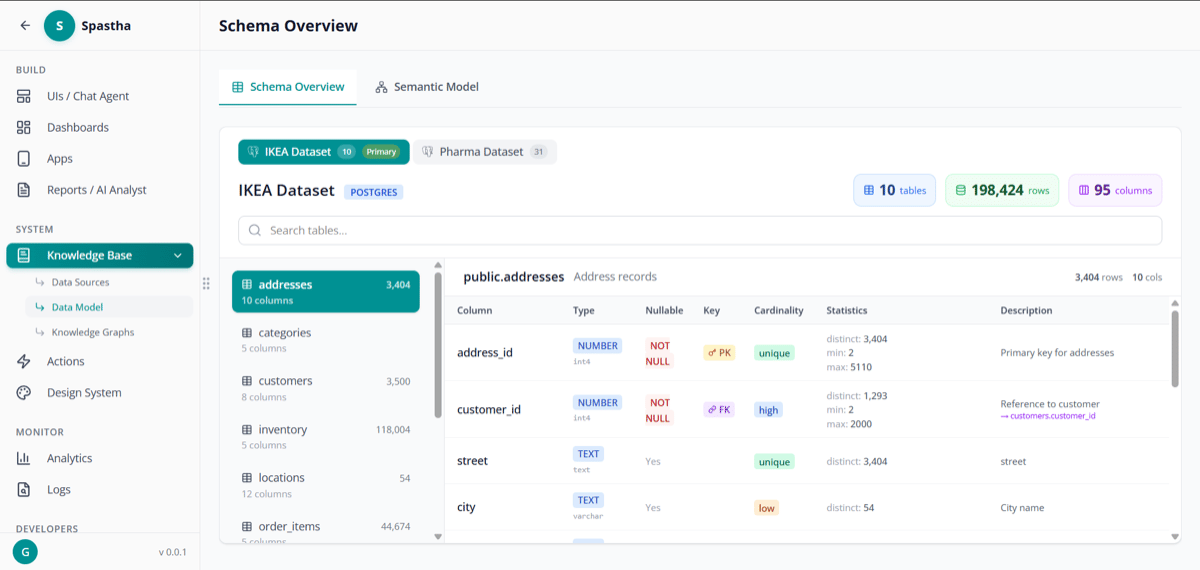
Examines representative samples to understand actual data characteristics, edge cases, and formats
3
Statistical Profiling
Calculates distinct values, distributions, frequencies, ratios, and patterns across columns
4
Domain Classification
Recognizes industry context (supply chain, retail, finance, healthcare) and applies domain-specific mappings
5
Question Generation
Proposes common, diagnostic, and exploratory questions that can be asked of this data
Traditional semantic modeling requires specialized consultants and takes 3-6 months. This automated process completes in approximately 2 days and improves continuously as the system is used.
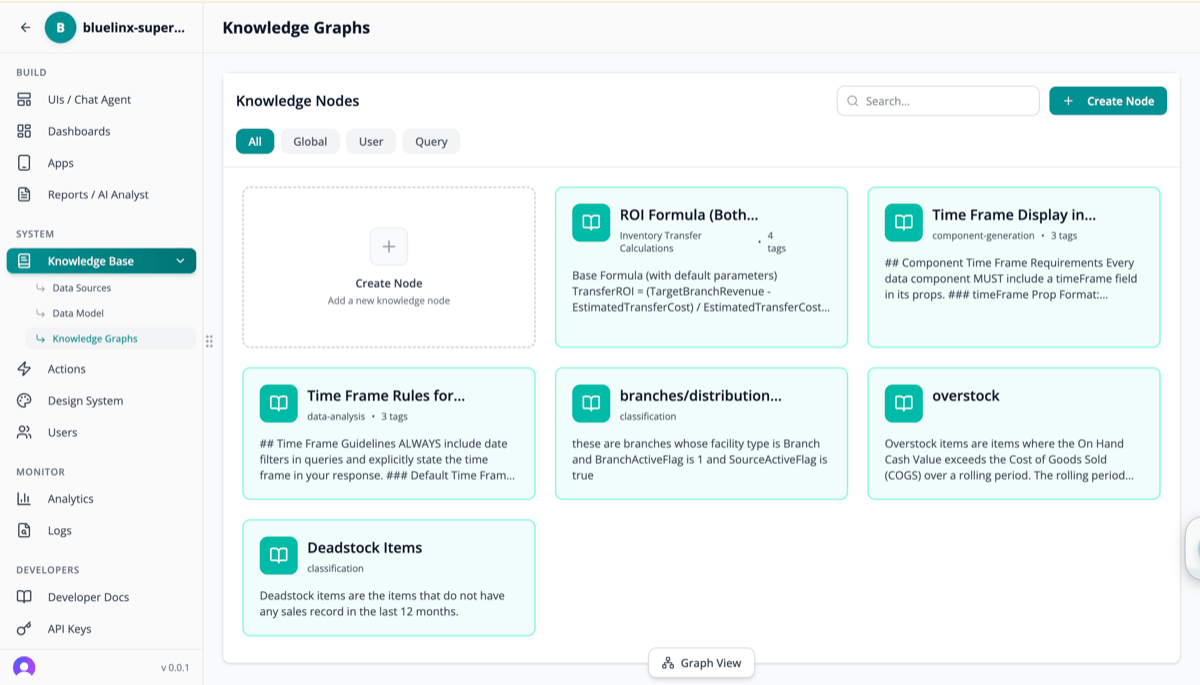
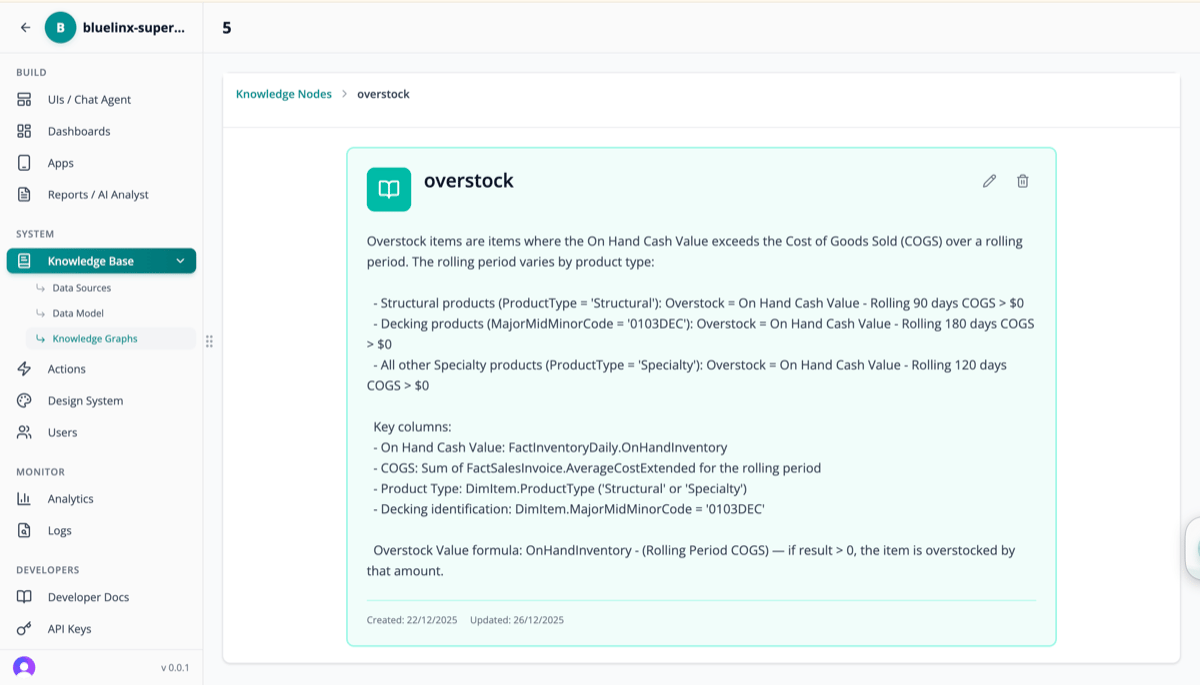
title: "Overstock"type: "classification"description: | Overstock items are items where the On Hand Cash Value exceeds the Cost of Goods Sold (COGS) over a rolling period. The rolling period varies by product type.rules: - "Structural products (ProductType = 'Structural'): Rolling 90 days COGS > $0" - "Decking products (MajorMinorCode = '0103DEC'): Rolling 180 days COGS > $0" - "Specialty products: Rolling 120 days COGS > $0"key_columns: - "FactInventoryDaily.OnHandInventory" - "FactSalesInvoice.AverageCostExtended" - "DimItem.ProductType" - "DimItem.MajorMinorCode"formula: "OnHandInventory - (Rolling Period COGS)"