

The Challenge
- Frequent unplanned plant downtime affecting production output
- Manual maintenance tracking with no visibility into root causes
- Inventory management of spare parts disconnected from maintenance needs, with no way to know which parts to stock proactively
The Approach
- AI-powered maintenance analysis to identify breakdown patterns across equipment
- Automated downtime trend analysis with root cause identification
- Integrated spare parts inventory management with safety stock alerts tied to maintenance data
The Outcome
Walkthrough
1. Dashboard Overview
A unified view of inventory, consumption trends, and equipment downtime, connecting maintenance and spare parts data that was previously siloed.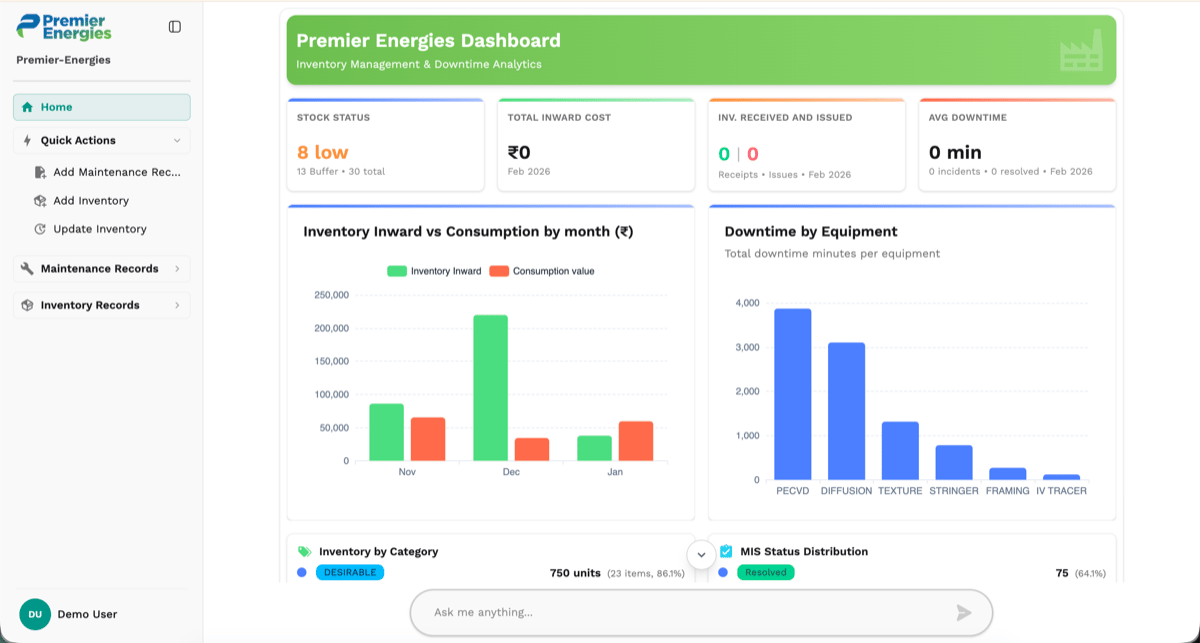
2. Downtime Analysis
140+ hours of downtime tracked over 3 months with an increasing trend identified for proactive intervention.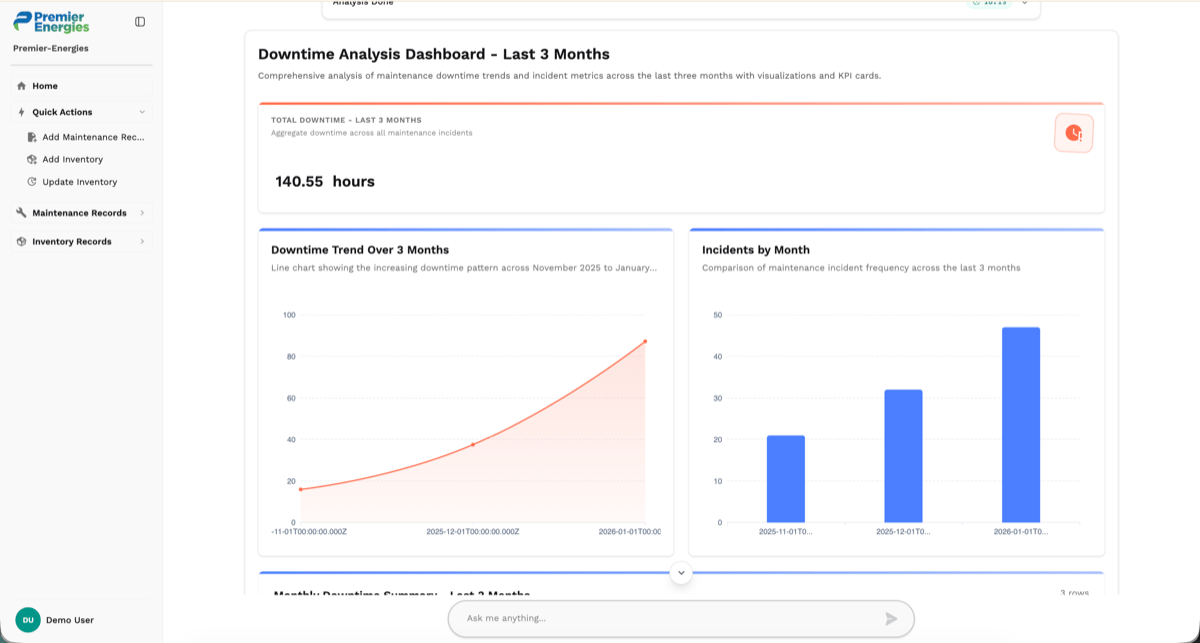
- Total downtime: 140.55 hours across all maintenance incidents
- Trend: Increasing pattern from November 2025 to January 2026
- Incidents by month: Rising from ~18 to ~50 incidents, signaling a systemic issue requiring attention
3. Safety Stock Alerts
Superatom identified 104 units below safety stock with 3 items completely out of stock, enabling AI-driven restocking priorities by location.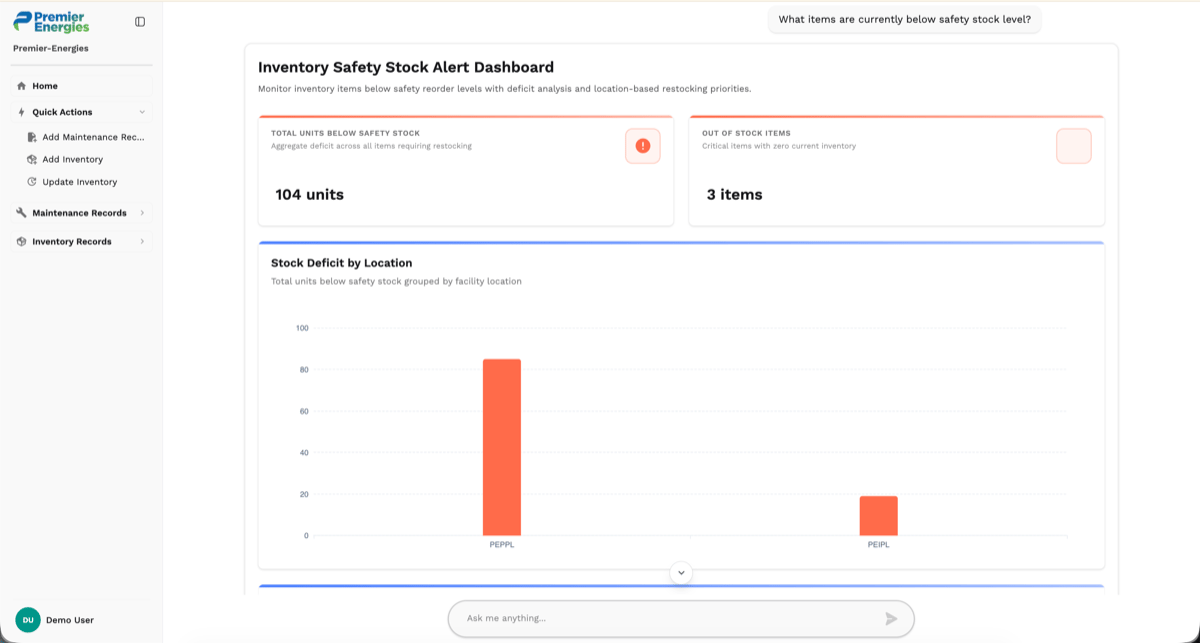
4. Replenishment Cost Analysis
Comprehensive cost breakdown to replenish all items to maximum stock levels: 66,360 units at a total cost of ₹66,360.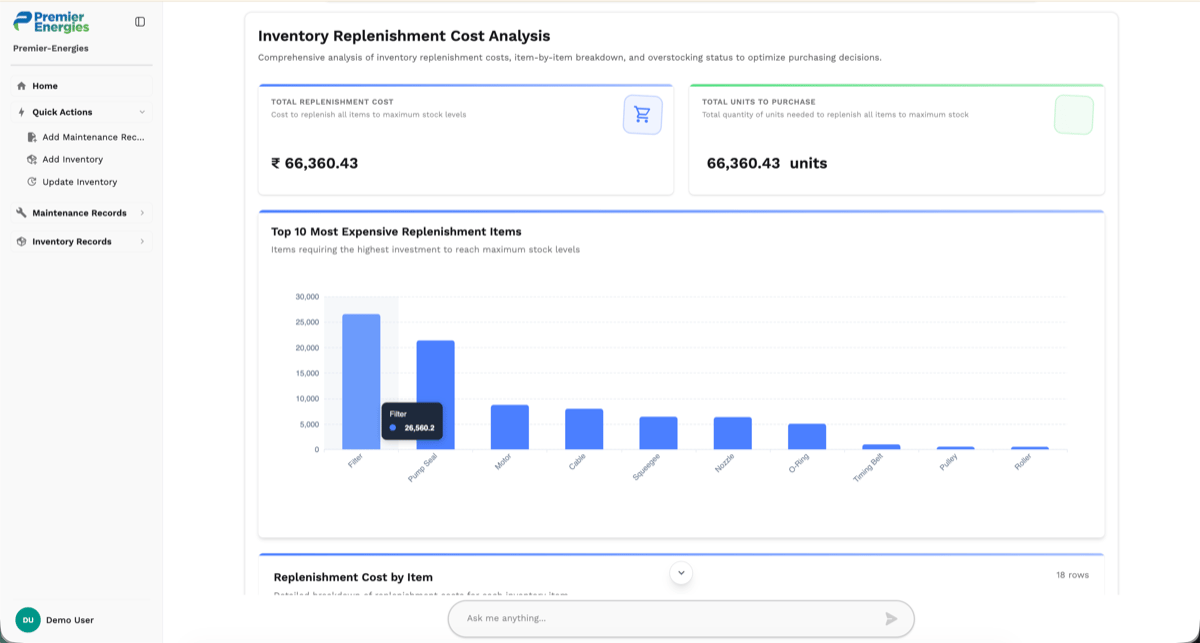
5. Inventory Updates via AI
Users can update inventory directly through natural language commands. “I want to update inventory” triggers a structured update flow.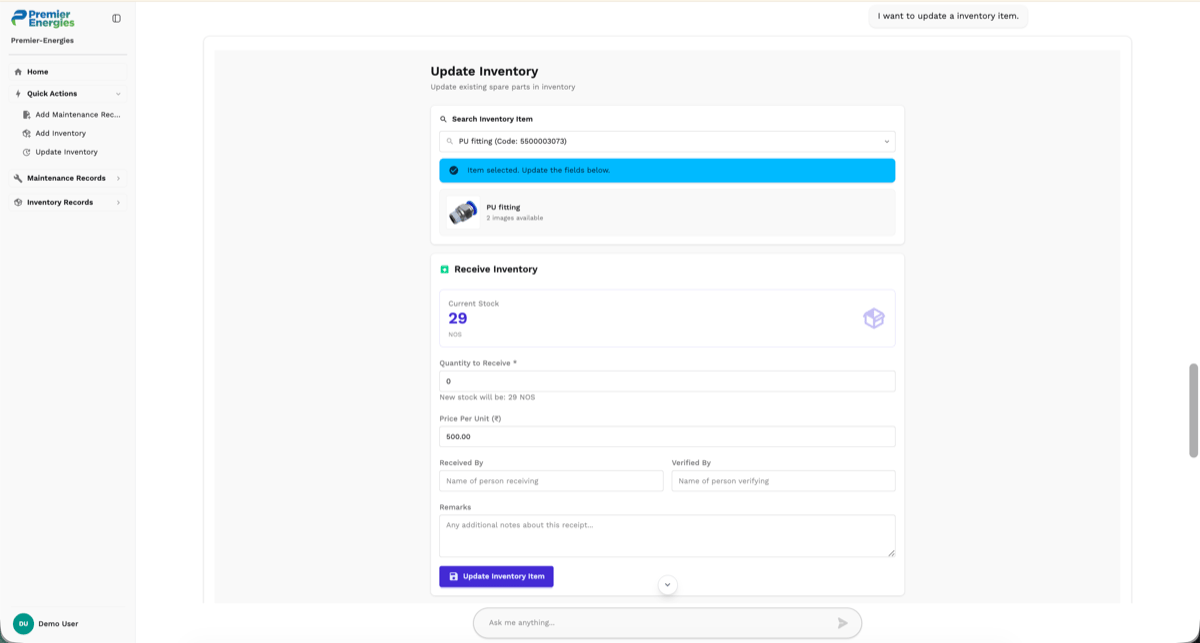
Key Capabilities Demonstrated
Next Steps
BlueLinx
Inventory optimization and transfer automation
Use Cases
Explore more industry applications